Conceived, drawn, and finished by Stephanie Bradley. No generated imagery.
Every piece on this site began as a blank page and a rough first idea. I draw it, I finish it, and I keep the working stages as I go, so the making is something you can look at rather than something you have to take my word for.
How a piece is made
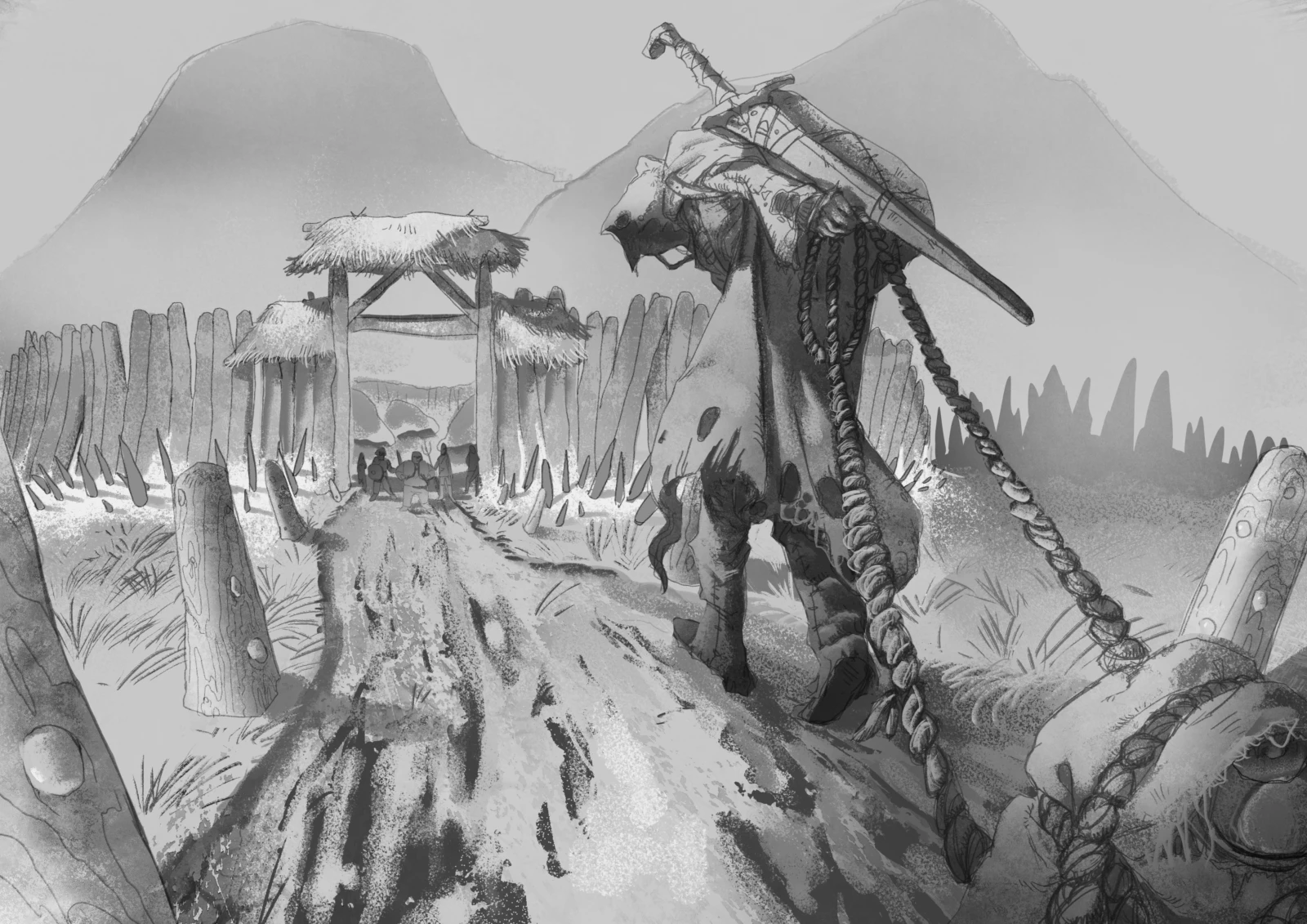
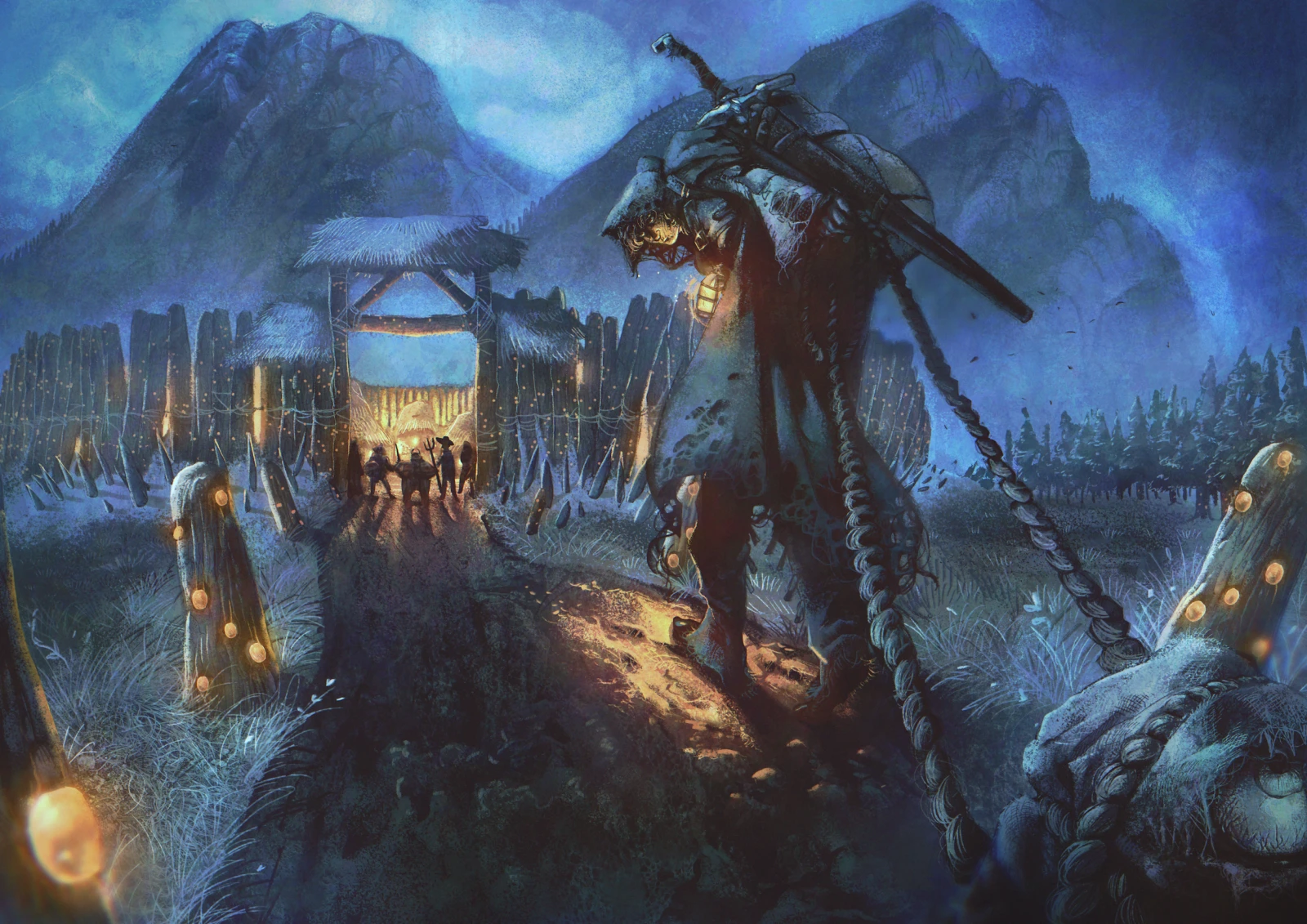
- 01Black and white draft before colour tests

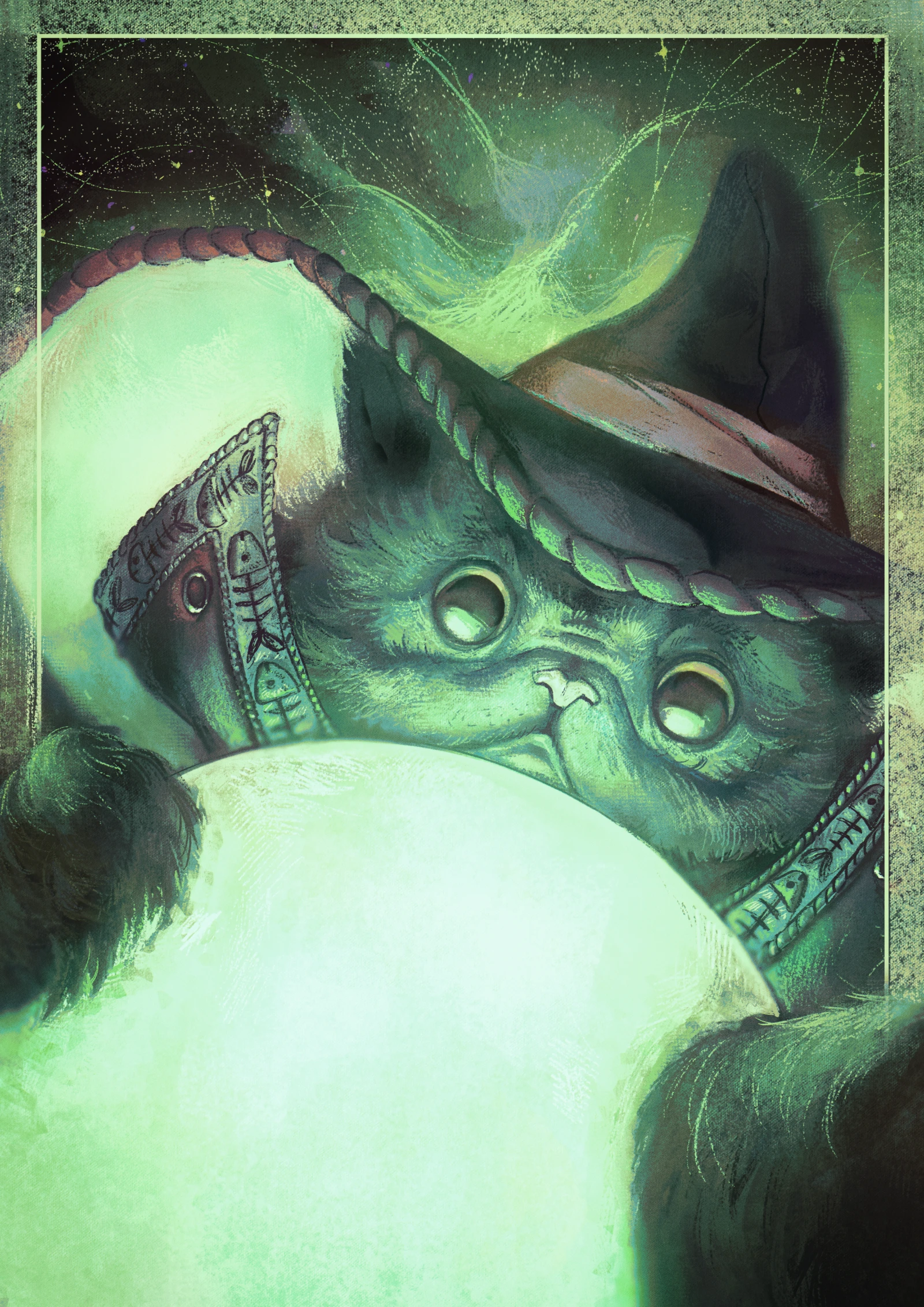
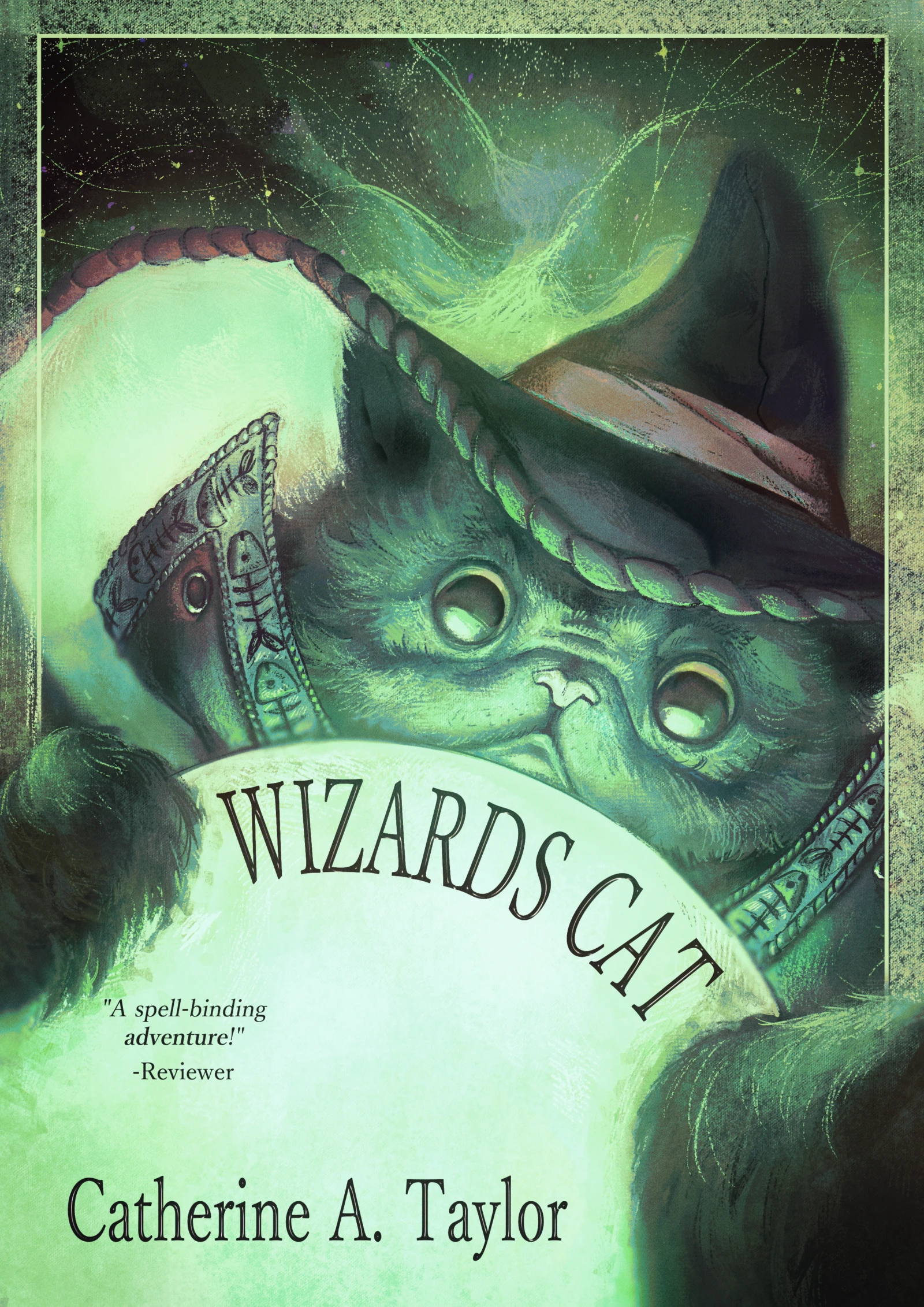
- 01Timelapse of this piece
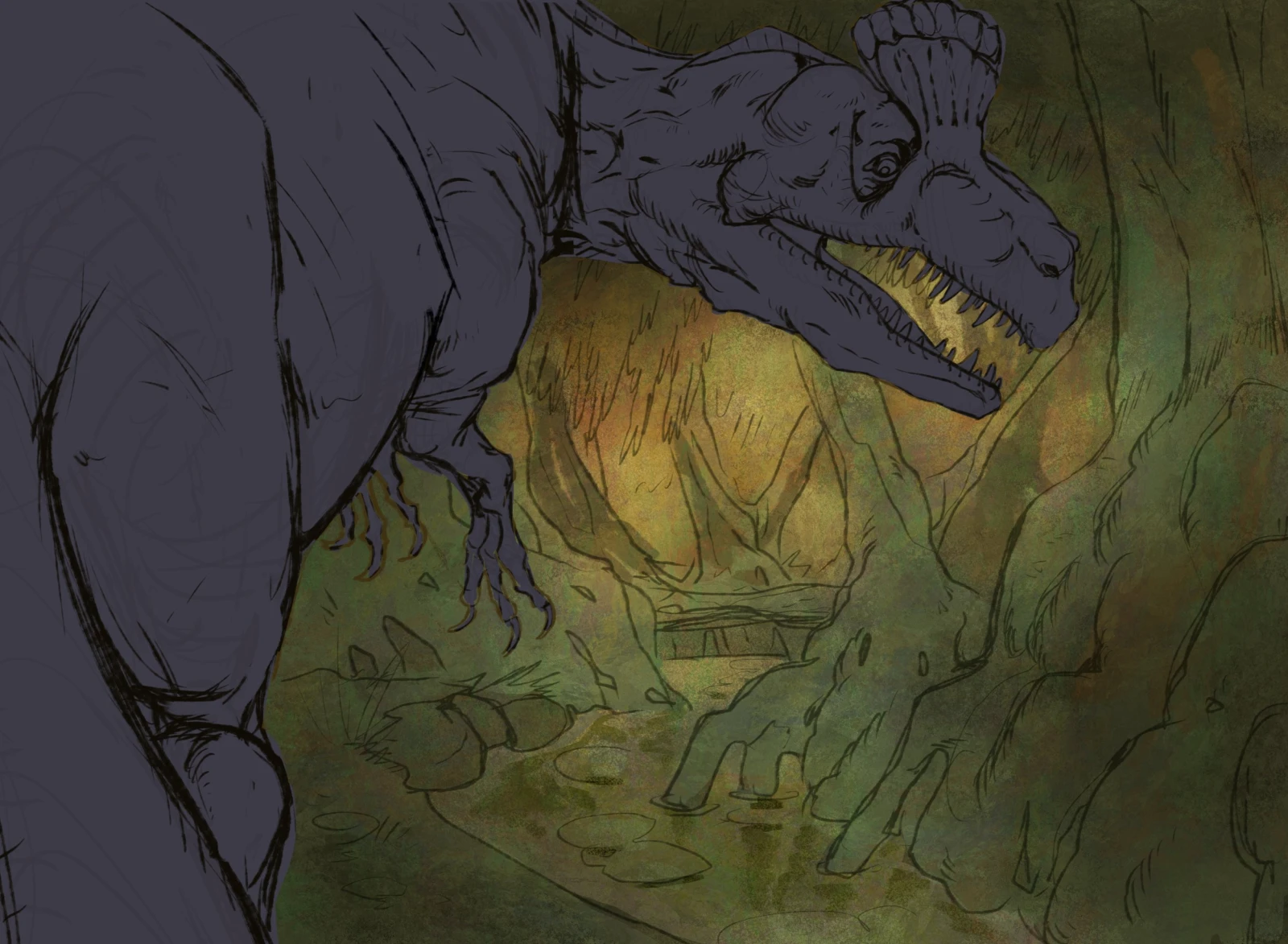

- 01The value study. Grey blocks for the animal, warm and cool for the clearing, everything else decided later.
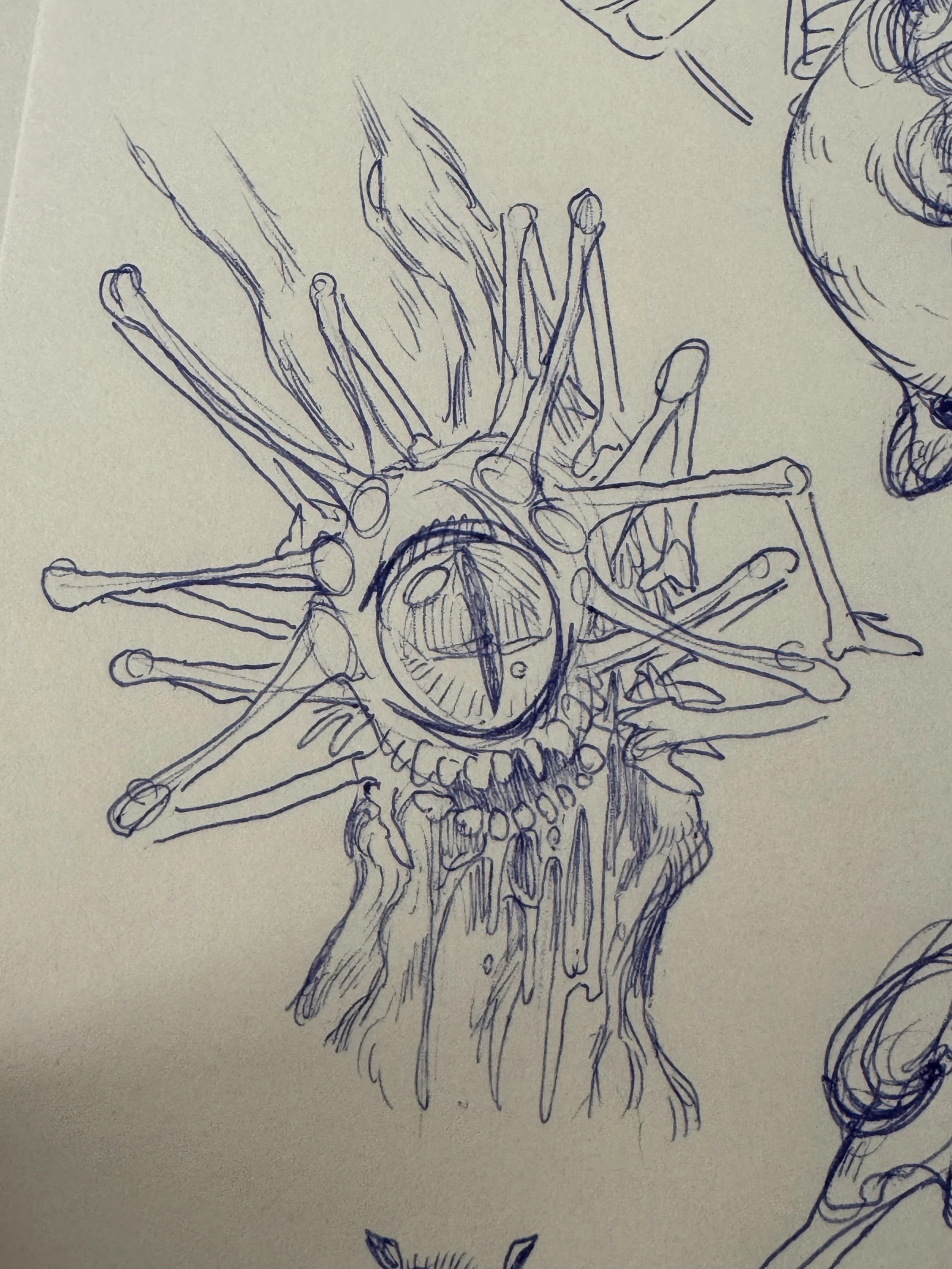

- 01The first sketch, from a page of creature ideas. Almost nothing about it changed after this.
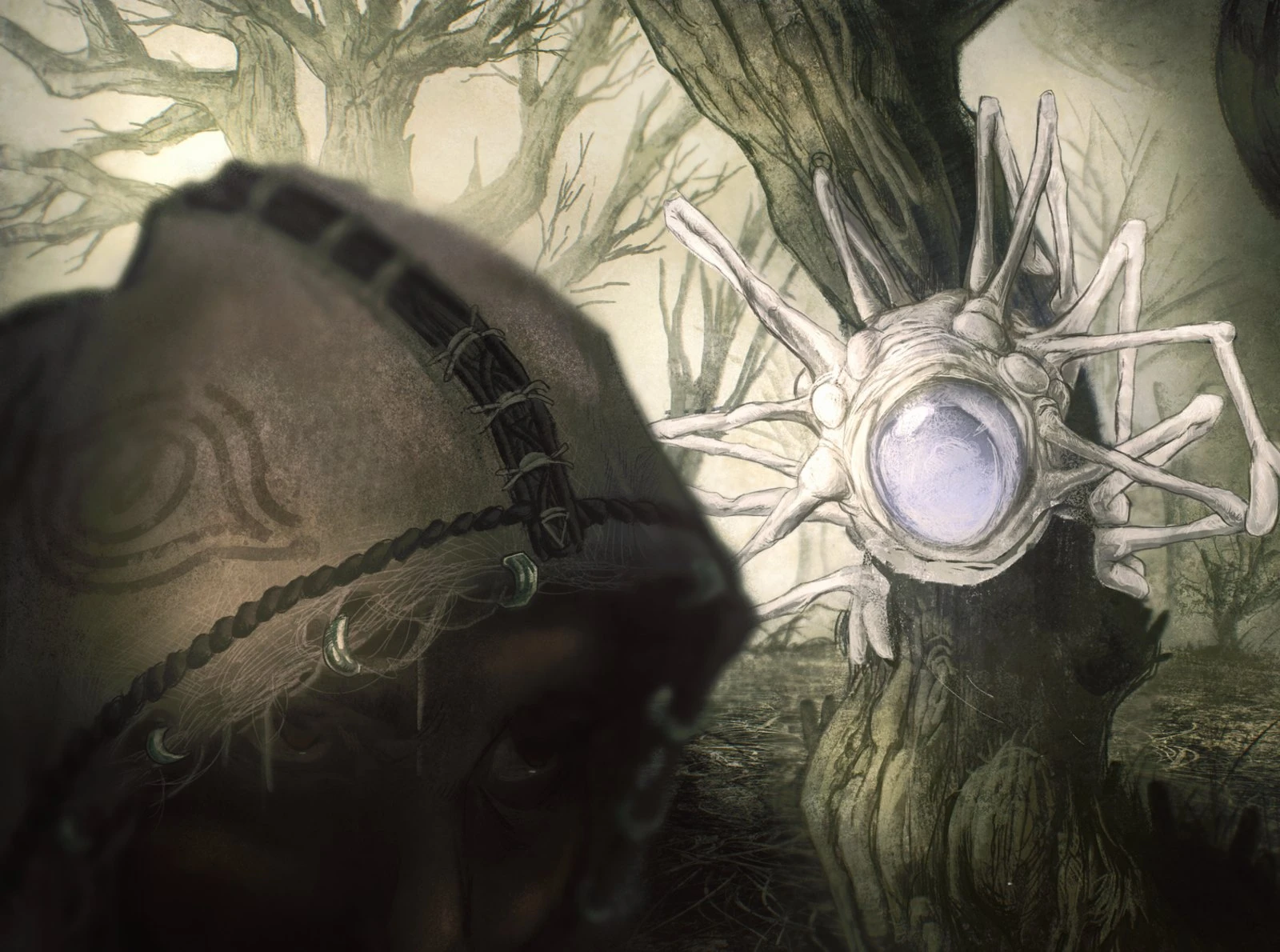
- 02Line work and flat colour in place, before the fog and the final colour pass.
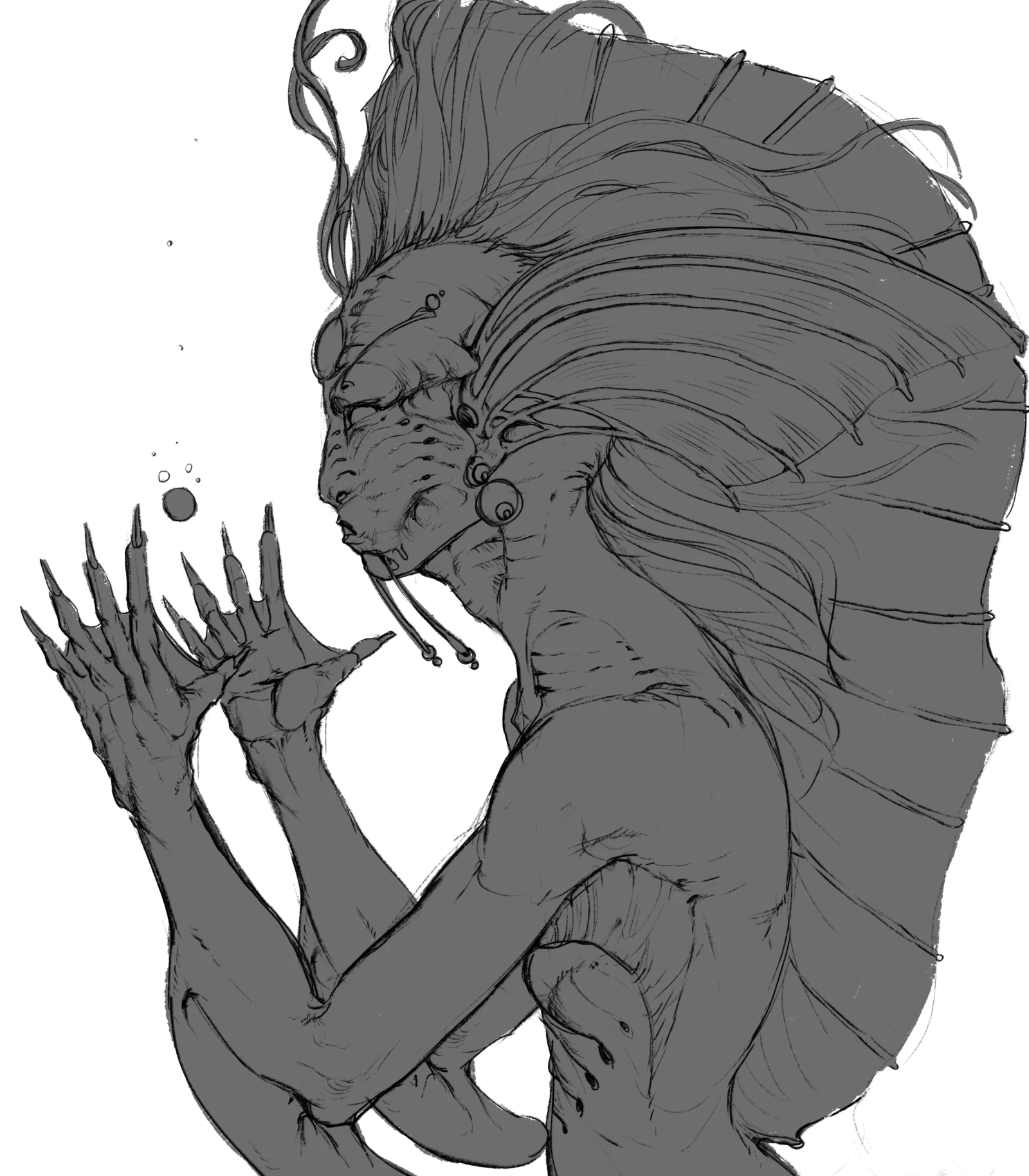
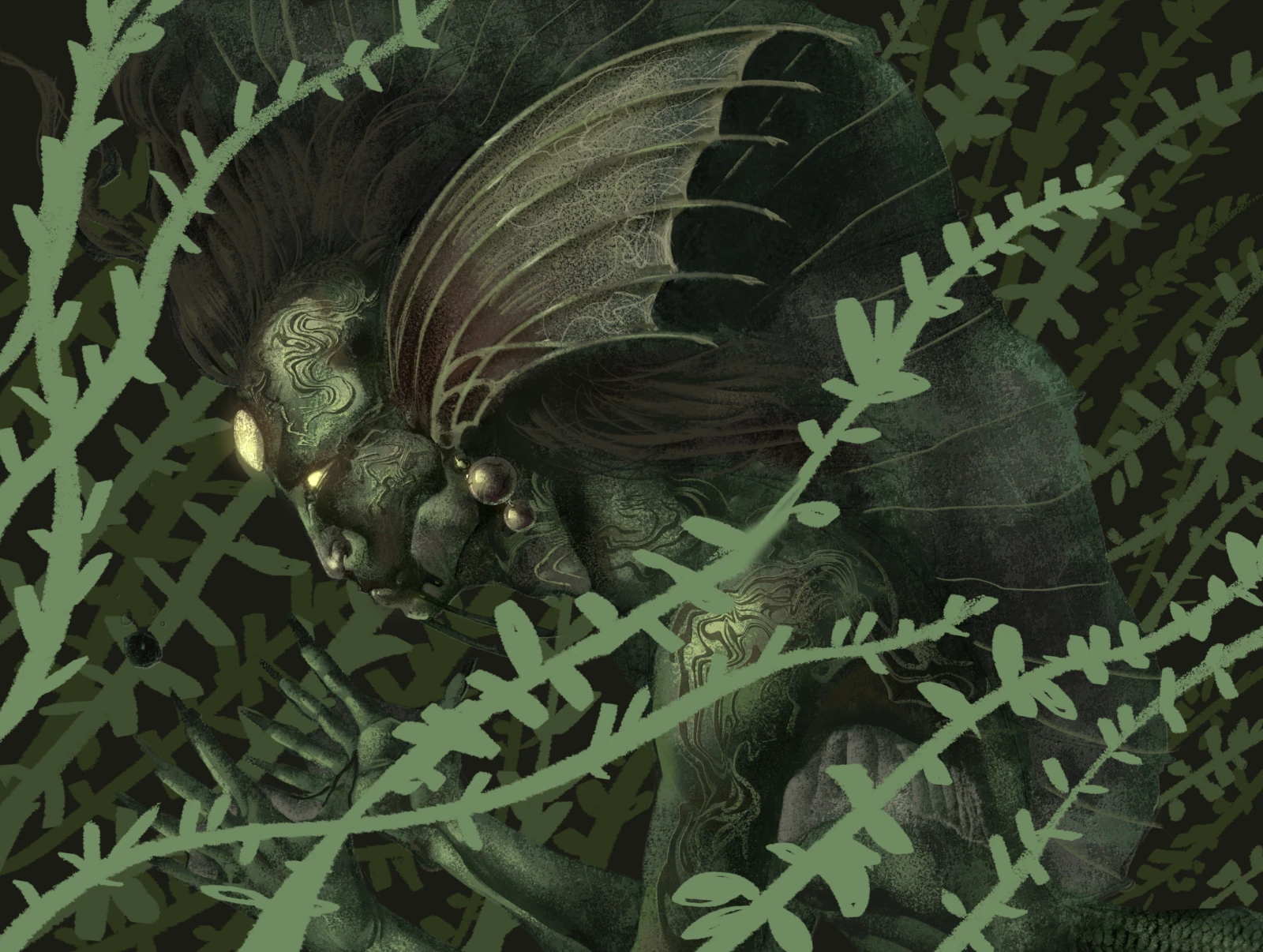
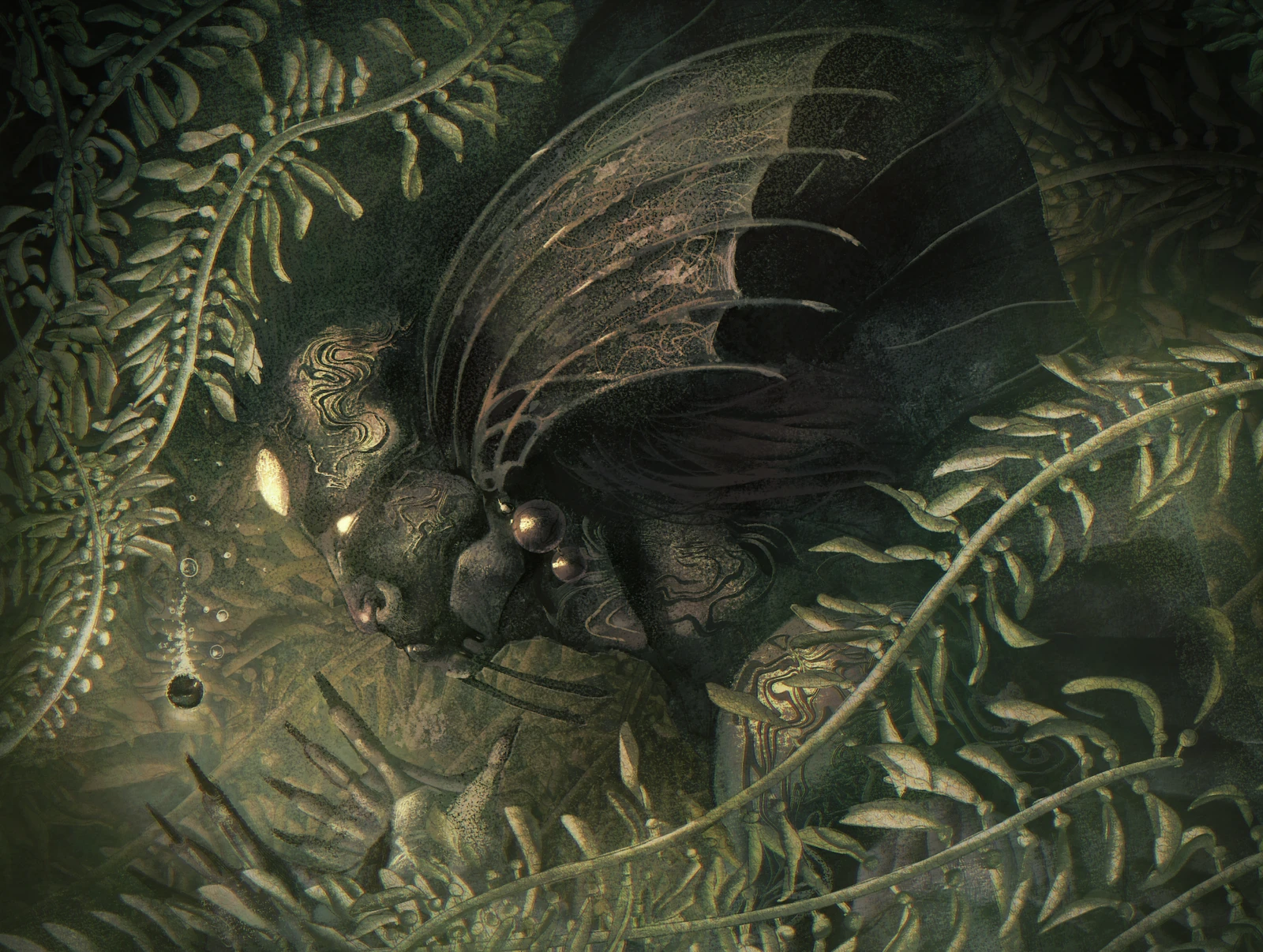
A drawing usually goes study, block-in, finish. The study is where the thinking happens, and where most of the mistakes get made. The block-in sets the masses and the light. The finish is the long part, and it is mostly texture and small decisions nobody is meant to notice.
The sketchbook
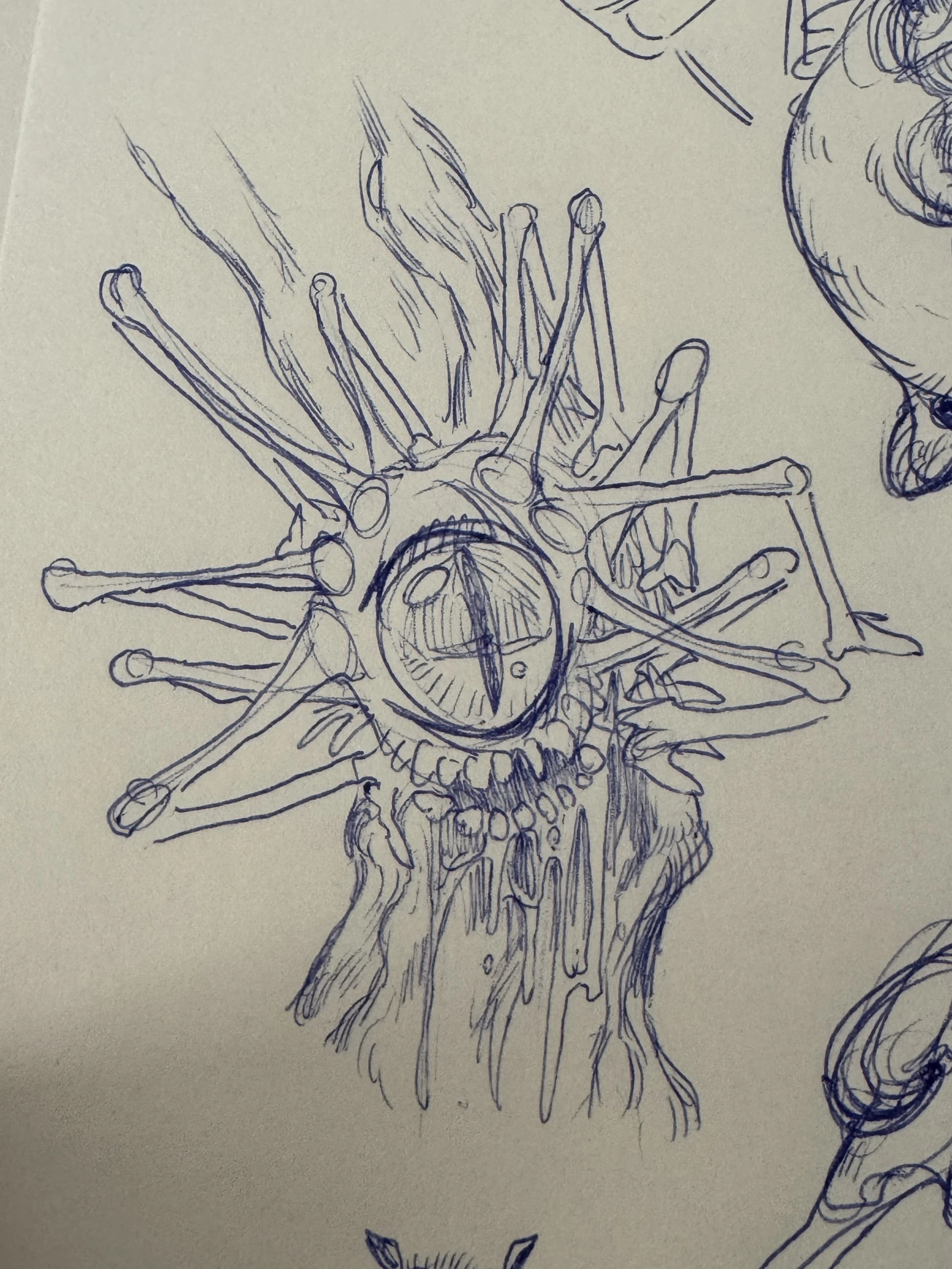
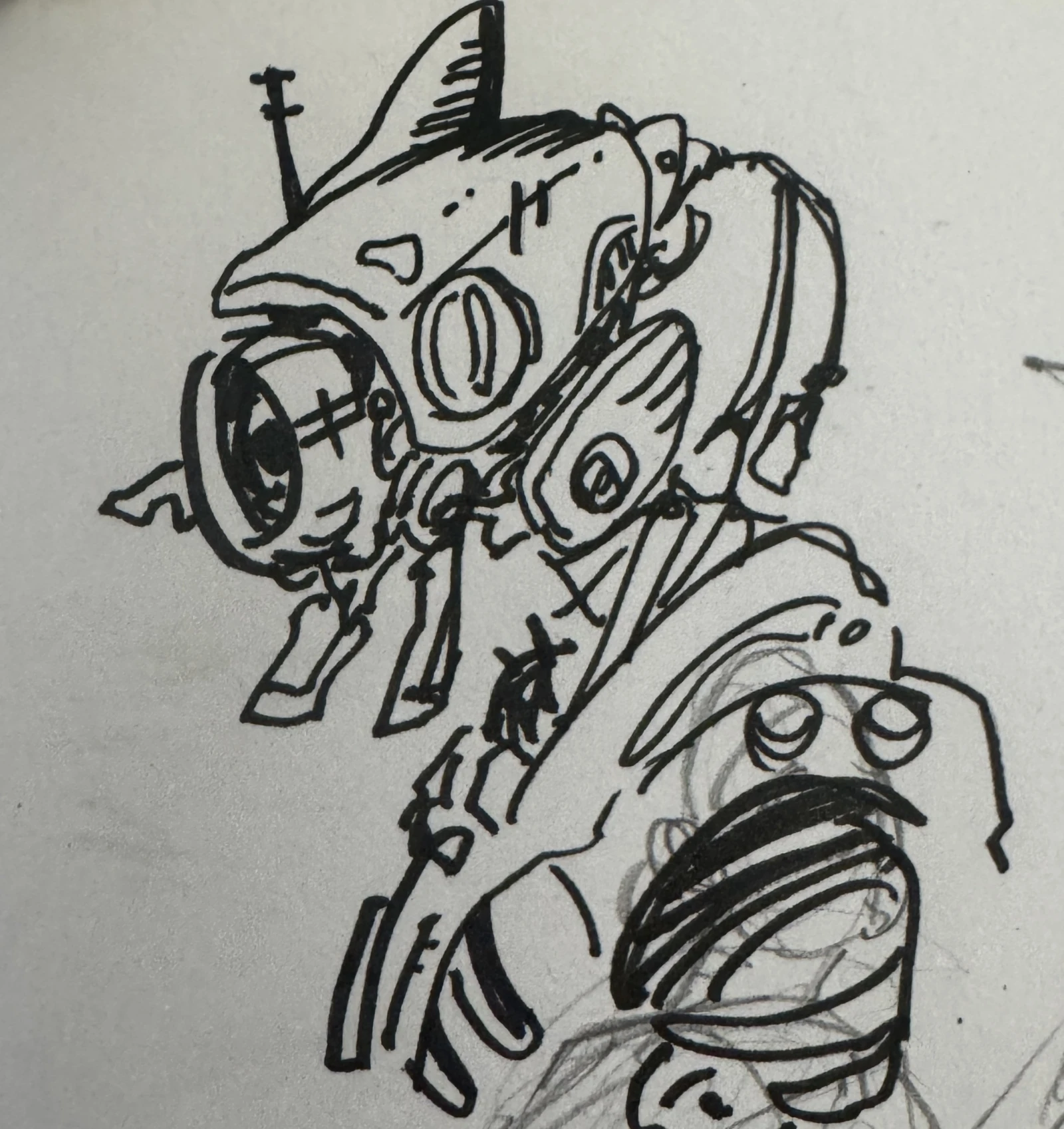
Everything starts here. These are pages out of the sketchbooks I keep going beside the finished work, mostly ballpoint, drawn without much of a plan for where any of it ends up.

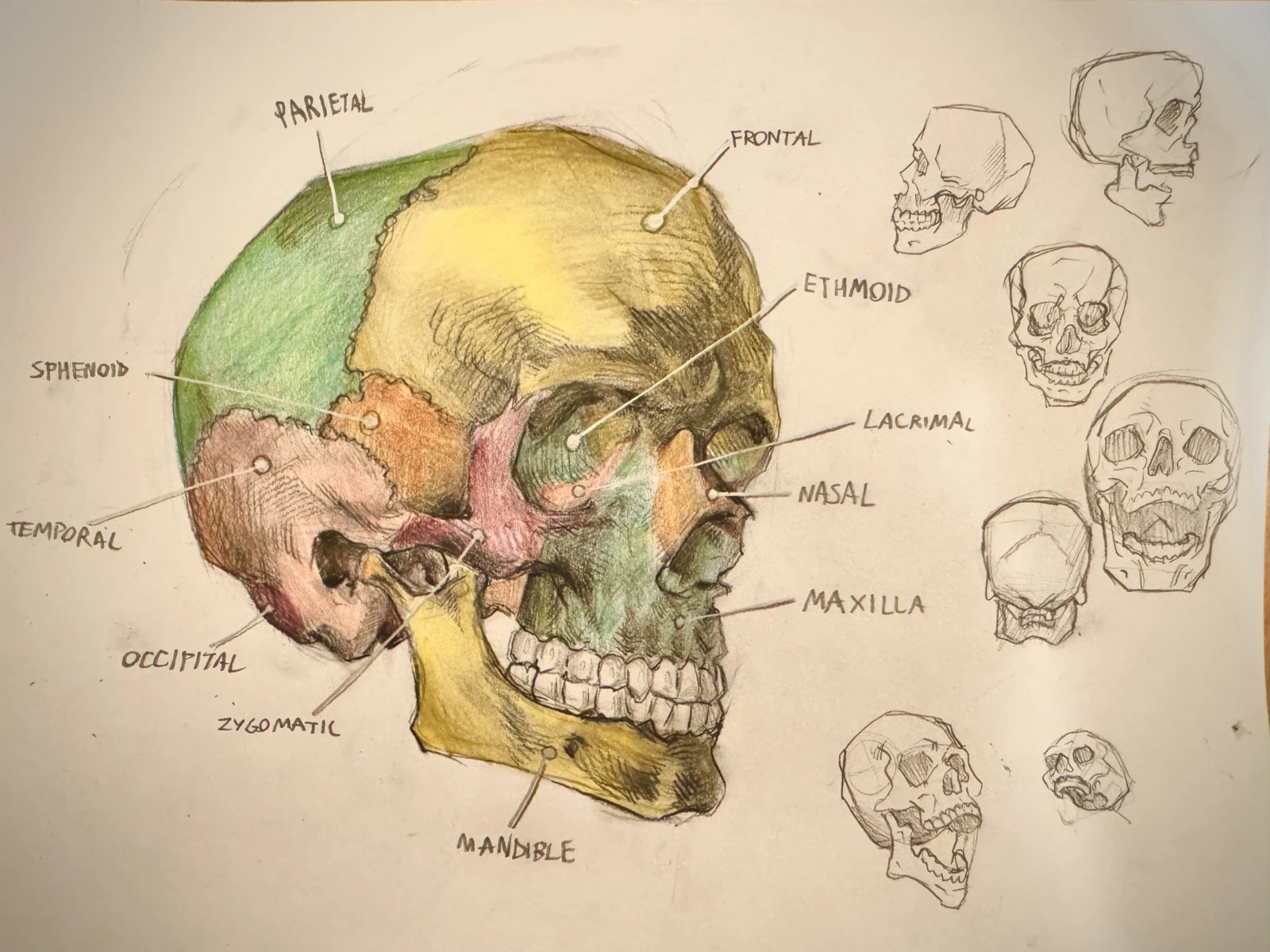
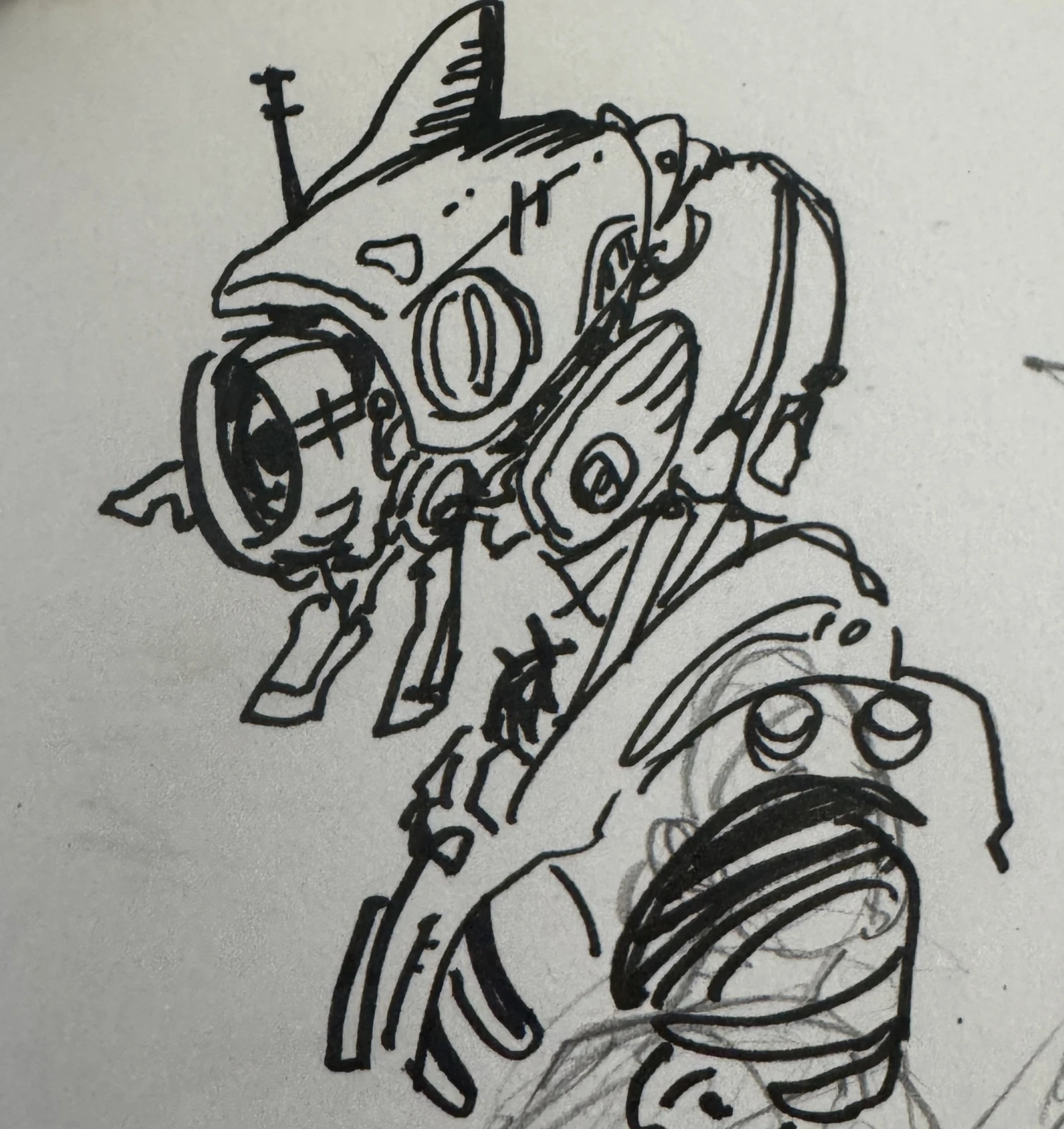

The tools I use
I primarily use Clip Studio Paint for all digital work, and also have experience in Adobe Photoshop, Adobe Illustrator, and Procreate. Plenty of pieces start on paper in ballpoint before anything goes near a screen. The tools are ordinary ones. What is in the file was drawn stroke by stroke, on a tablet, by me.
What no generated imagery means
It means no part of a finished piece is output from an image generator. Not a background, not a texture, not a hand I did not feel like drawing. Where I use reference it is a photograph, a real object, or my own earlier work, and I am happy to say which if you ask. I am not pretending the software does not exist. I am telling you none of it ends up in your file.
The record that comes with the work
Every published piece carries a number, and that number opens a record: the facts about the piece, the stages it went through, and a plain line saying who made it. Work that ships as a print or an original comes with a certificate as well, signed, carrying the same number. A record only ever shows what I have actually written down. If something is missing from one, it is because I have not filled it in yet.
Want something made this way? Tell me what it is for →